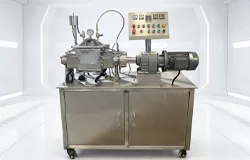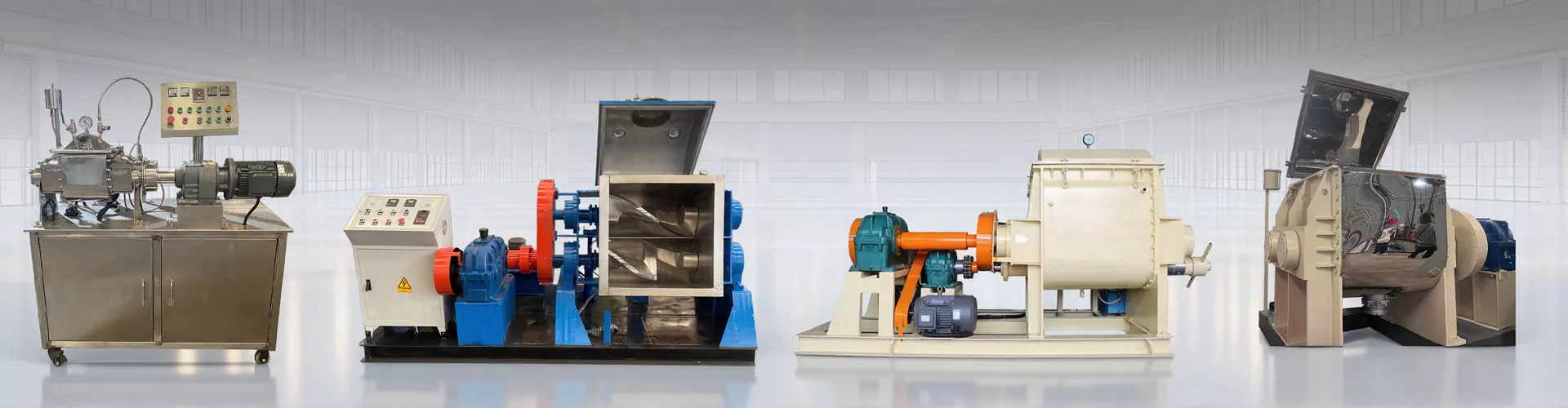


Damping materials typically feature high viscosity, high solids content, and poor flowability, making them difficult to process effectively with standard high speed mixers.
Sigma mixer utilizes two interacting ∑-shaped blades to subject the material to continuous:
This process gradually transforms powders, rubber, resins and liquid components into a homogeneous, high-viscosity compound.
For damping compounds containing significant amounts of fillers—such as calcium carbonate—sigma mixer delivers robust mixing and kneading capabilities, while controlled heating can be used to improve material flowability.
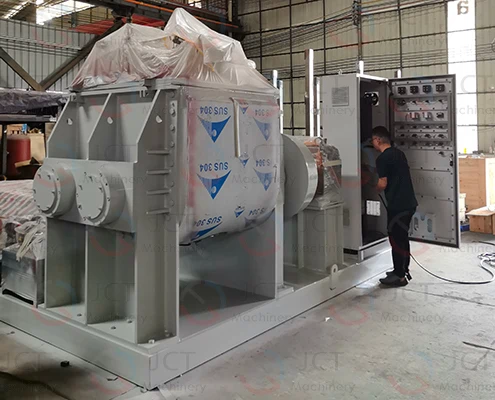
Damping plate materials typically exhibit high viscosity after thorough mixing; conventional discharge methods often suffer from issues such as slow unloading speeds and significant material residue.
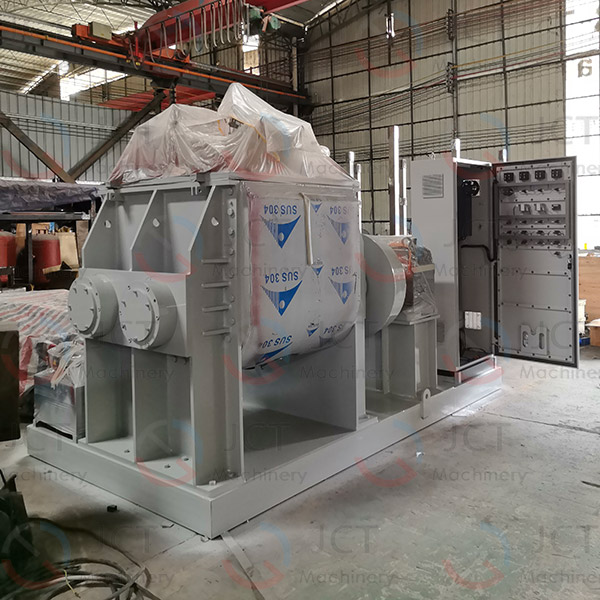
JCT Machinery's damping plate bottom discharge sigma mixer utilizes a bottom-discharge configuration, employing a hydraulic or pneumatic mechanism to control the discharge outlet, thereby facilitating the efficient unloading of high-viscosity compounds from the mixing chamber.
1. Rapid discharge
The bottom discharge outlet is positioned directly at the base of the mixing chamber, facilitating efficient unloading of high-viscosity materials.
2. Reduced manual cleaning
An optimized discharge design minimizes material residue inside the equipment, thereby reducing the workload associated with manual cleaning.
3. Suitable for high-viscosity materials
It is particularly well-suited for materials with poor flow characteristics, such as butyl rubber, damping compounds, sealants, and hot-melt adhesives.
4. Facilitates batch production
Rapid completion of the discharge process for each batch helps improve overall production efficiency.
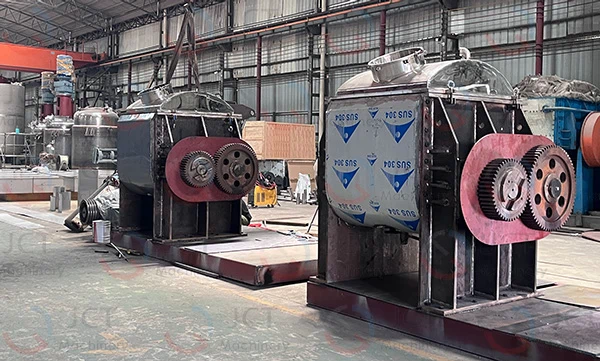
1. Double sigma blades
Double ∑-shaped blades rotate in opposite directions at differential speeds, exerting strong shearing and kneading forces on high-viscosity materials to ensure the thorough mixing of different components.
2. Heating/cooling jacket
The mixing chamber can be equipped with a jacket for heating or cooling using thermal oil, water, or other heat transfer media, helping to control the processing temperature of the damping material.
3. Vacuum mixing
For damping materials requiring reduced air entrapment, a vacuum system can be configured to perform degassing during the mixing process.
4. Customized design
Equipment specifications—including chamber volume, blade configuration, heating method, discharge mechanism, and automation control system—can be customized based on the client's formulation, viscosity, filler ratio, production capacity, and downstream molding process.
| Model | Motor Power (kW) | Heating Power (kW) |
| 50L | 3 | 1 |
| 100L | 7.5 | 4 |
| 200L | 11 | 6 |
| 300L | 15 | 9 |
| 500L | 22 | 16.2 |
| 1000L | 45 | 27 |
| 1500L | 55 | 32.4 |
| 2000L | 75 | 40 |
| 3000L | 90 | 55 |
| 4000L | 132 | 65 |
**Designed according to actual needs.
Contact JCT today for your customized damping plate bottom discharge sigma mixer, or schedule a free equipment trial: +86-181 3837 3963 (Whatsapp, Wechat), sigmamixer@outlook.com.






 Home
Home