

 Home
HomePRODUCT APPLICATIONS
- Silicone rubber (HTV, RTV) | Solid silicone rubber (HCR) | Liquid silicone rubber (LSR)
- Glue base | Butyl rubber | First sealant for insulating glass | Edge warming strip | TPS | 4SG (suitable for all glue applicators) | Glaston
- Butyl glue for encapsulating solar photovoltaic module glass edge sealing (Perovskite | Copper indium gallium selenide | Cadmium telluride | Heterojunction | Thin film battery) (Watertightness | Airtightness) | Wind power butyl tape | Waterproof butyl
- Automotive shock absorption and noise reduction butyl tape blocks | Extruded butyl tape
- Epoxy resin | Polymer materials | Composite materials | Polyisobutylene | Glue base
- Glue base | Hot melt adhesive | Adhesive
- Clay | Modeling clay
- Explosion-proof tires | Self-healing tires
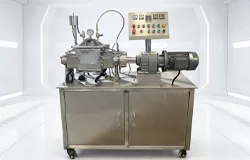
Typical operating conditions for sigma mixer are:
- Low speed
- High torque
- Strong continuous load capacity
Compared to high-speed equipment, sigma mixer will not "slip" or fail due to increased viscosity, and can maintain stable shear force throughout the mixing process.
During the kneading process, mixing and degassing simultaneously effectively eliminates:
- Gas introduces by the raw materials
- Air traped in the powder
- Microbubbles generated during reaction or mixing
These are indispensable process conditions in sealant production.
The core of sigma mixer is not "stirring", but rather kneading, pressing, shearing adn folding:
- It forcibly pulls highly viscous materials
- It thoroughly incorporates powder into the colloid.
- It prevents filler agglomeration.
- It makes the colloid structure more compact.
For adhesives with extremely high filler content, this is a decisive advantage.