


 Home
Home JCT
JCT  Jan 15,2026
Blades are an important component of sigma mixer. Different blade designs directly determine the shearing force, extrusion force, mixing efficiency, and applicable industries of the equipment.
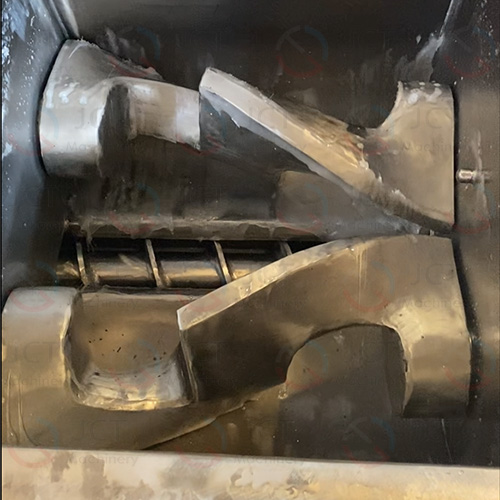
1. ∑-shaped blade (sigma blade)
The most common and widely used kneader blade
Structural Features:
- Two asymmetrical ∑-shaped blades
- Rotating in opposite directions at different speeds
- Extrusion + shearing + tumbling in parallel
Advantages:
- Suitable for ultra-high viscosity materials
- Unifrom mixing, no dead zones
- Mature technology, high stability
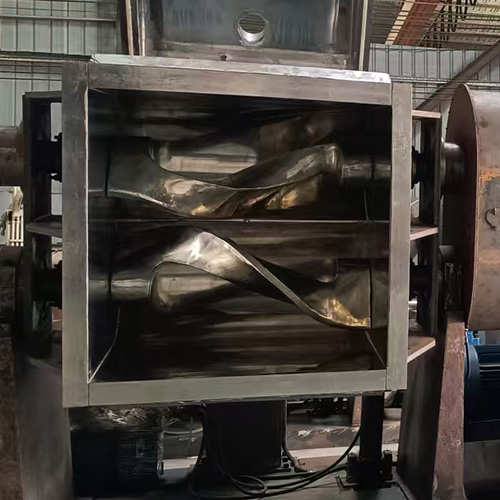
2. Z-shaped blade
High-shear kneading blade
Structural Features:
- Blade shape resembles the letter "Z"
- Strengthened shear force
- Outstanding pushing capacity
Advantages:
- High dispersion efficiency
- Suitable for difficult-to-disperse systems
- High kneading strength
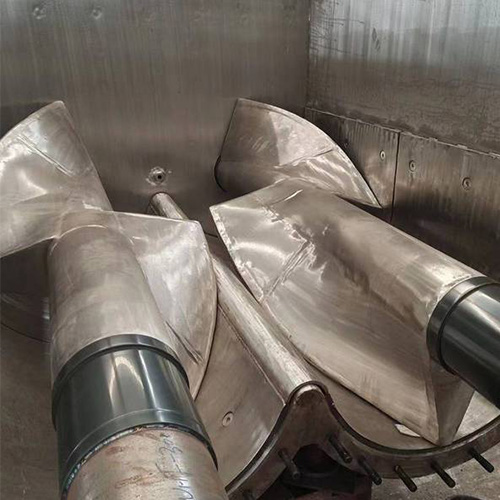
3. Biwing-shaped blade
Enhanced material compression, shearing, and tumbling effects
Structural Features:
- Double-wing forming
- Double-axis counter-rotation with speed difference adjustment
- Optimal clearance between blades and cavity for large coverage area
Advantages:
- Strong extrusion pressure, suitable for high-viscosity materials
- Perfect material turning, reducing mixing dead zones
- High dispersion efficiency, promoting uniform filler distribution
- Stable operation, suitable for mass production
 Does Sigma Mixer Need To Have Vacuum System?