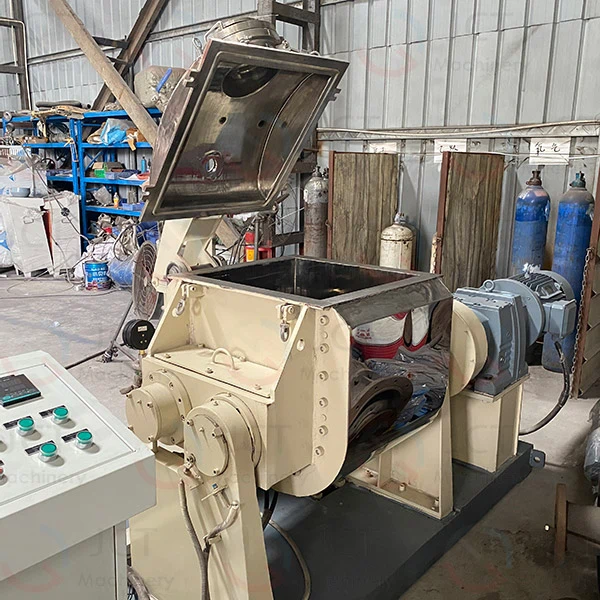
Silicone products—such as silicone rubber, silicone sealants, and electronic potting compounds—typically exhibit extremely high viscosity and unique rheological properties, while also demanding stringent controls over temperature, vacuum levels, and material purity during processing. Sigma blade mixers were specifically designed to address the challenges associated with mixing such high-viscosity materials.
1. Main Role
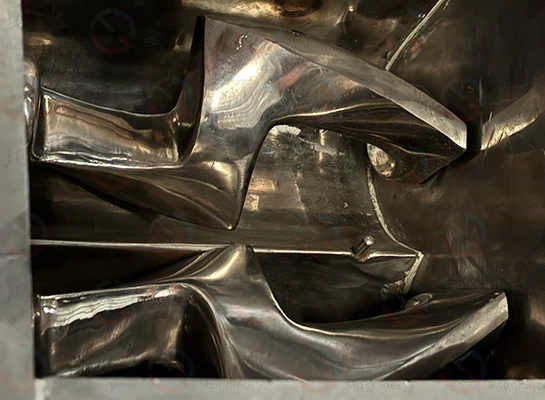
- High-intensity, high-viscosity mixing (shearing and dispersion): When silicone base polymers (such as raw rubber or 107 gum) are mixed with fillers (such as fumed silica or precipitated silica), the material becomes extremely viscous. Using a pair of intermeshing Sigma-shaped (or Z-shaped) blades rotating at different speeds, the sigma blade mixer generates powerful shear, compression, and stretching forces. This action uniformly blends long polymer chains with solid fillers, fully dispersing materials like silica down to the molecular level to achieve effective reinforcement.
- Efficient dehydration and devolatilization (vacuum system): Silicone raw materials and fillers often contain trace amounts of moisture or low-molecular-weight volatiles (such as cyclic siloxanes like D4 and D5). These impurities can severely compromise the final product's heat resistance, insulation properties, and aging performance. Equipped with a high-performance sealed vacuum system, sigma blade mixer allows for the thorough extraction of moisture and volatiles—often achieving vacuum levels better than -0.095 MPa—while simultaneously applying heat during the intensive kneading process.
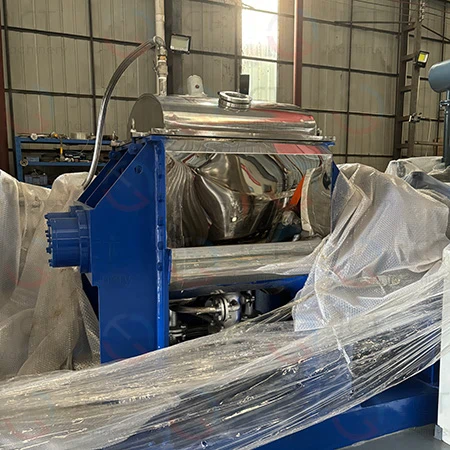
- Precise temperature control (reaction and maturation): Filler dispersion and certain silicone modification reactions require specific temperature conditions. The sigma blade mixer's design allows for the circulation of heat-transfer oil or steam through the vessel jacket and hollow blades for heating, or water for cooling. This structure ensures uniform and precise temperature control even when high-viscosity materials generate heat due to intense shearing, thereby preventing localized overheating that could lead to resin gelation or degradation.
2. Key Application Scenarios and Material Flow
In specific silicone product production lines, the kneader primarily plays a role in the following stages:
| Final Product |
Sigma Blade Mixer Process |
| High-temperature vulcanizing (HTV) rubber (solid silicone rubber) |
Base resin, fumed silica, and a structure control agent are charged into a kneader and subjected to high-temperature compounding, dehydration, and vacuum devolatilization to produce the base compound. This is the core compounding step in the production of solid silicone rubber |
| Room-temperature vulcanizing (RTV) rubber |
Used for mixing and dehydrating the base material—comprising 107 rubber and fillers such as calcium carbonate, silica (white carbon black), and pigments—thereby preparing the mixture for the subsequent addition of cross-linking agents and catalysts |
| Liquid silicone rubber (LSR) / electronic adhesives |
Handles the high-shear mixing of two-component (A/B) base materials, ensuring the perfect integration of various functional fillers without entrapping air bubbles |
3. Key Technical Specifications of Specialized Sigma Blade Mixe for Silicone
To meet the demanding process requirements of silicone production, modern silicone sigma blade mixer typically feature the following specialized configurations:
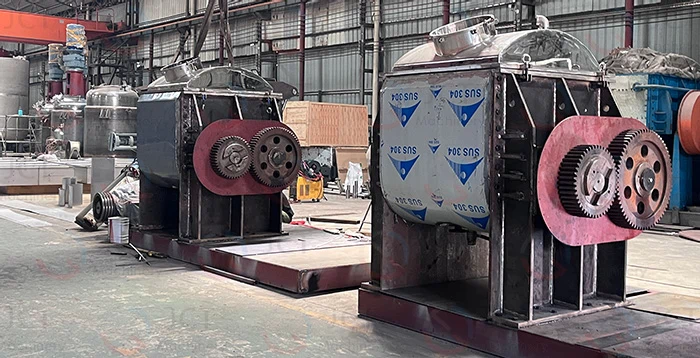
- Wear resistance and high-purity protection: Parts in contact with the material (such as the mixing chamber and blades) are typically made of 304 or 316L stainless steel and feature a mirror-polished finish. For processes involving significant amounts of hard fillers, the interior surfaces undergo hardening treatment to prevent metal wear particles from contaminating the silicone's color or compromising its electrical insulation properties.
- Shaft sealing technology (critical priority): Silicone is highly prone to leakage, and the process demands high vacuum integrity. Consequently, a multi-stage shaft sealing configuration—combining vacuum packing seals, mechanical seals, and gas seals—is employed to ensure leak-free operation (preventing both material and vacuum leaks) over the long term.
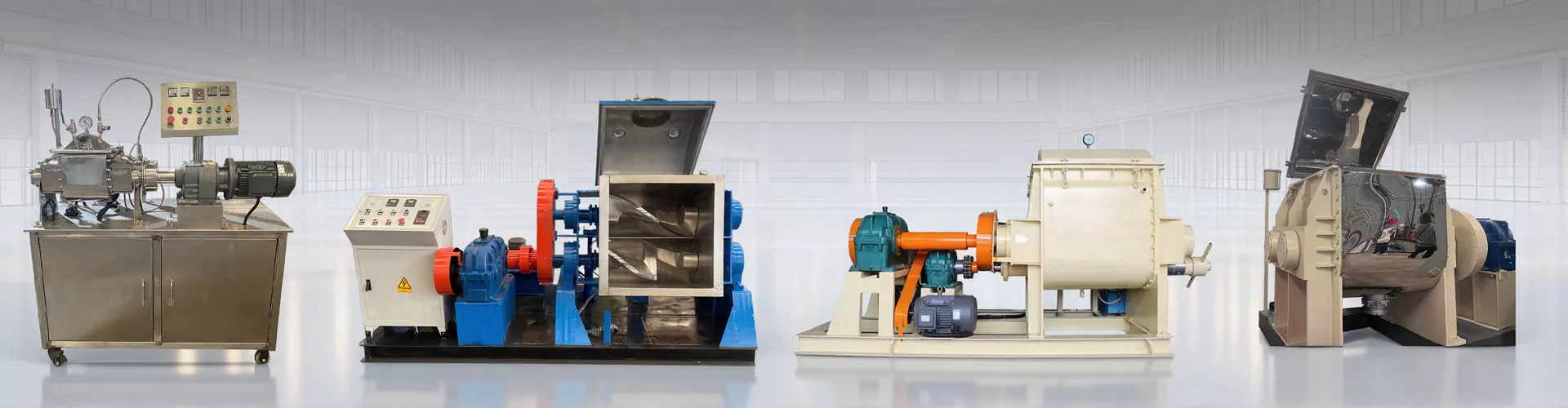
- Versatile discharge methods: Depending on material flow characteristics, the system can be configured for hydraulic tilting discharge (suitable for stiffer HTV rubber compounds) or bottom-discharge via screw extruder (suitable for continuous downstream processing or pelletizing/strip cutting).
Contact our technical experts today to get detailed sigma blade mixer equipment specifications, customized solutions, and a free quote!
Tel: +86-181 3837 3963 (Whatsapp, Wechat)
Email: sigmamixer@outlook.com






 Home
Home